


What Is 5-Axis CNC Machining?
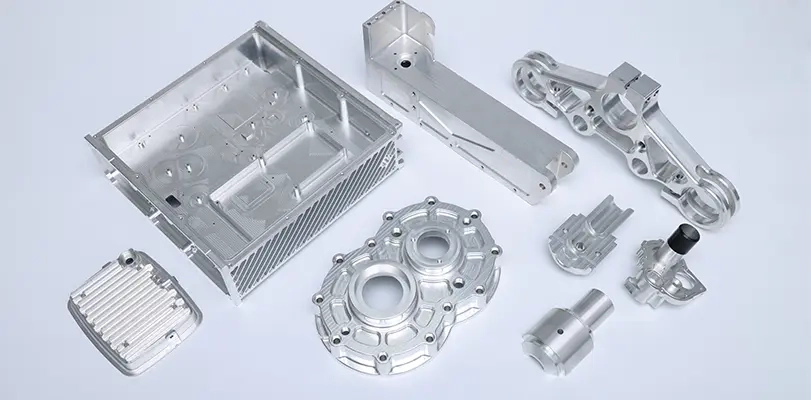
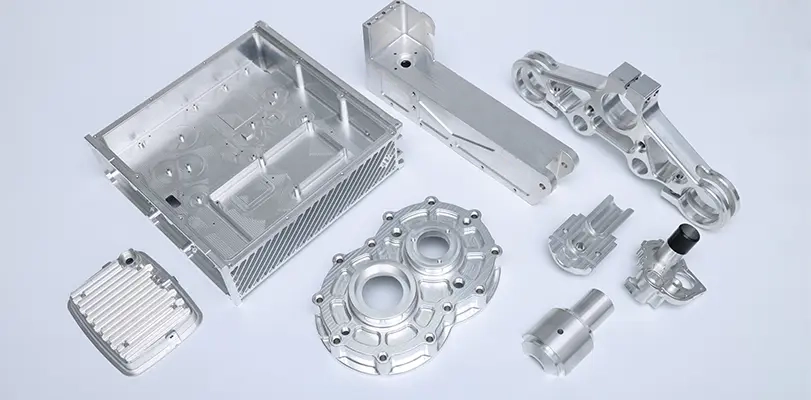
5-axis CNC machining is an advanced manufacturing process used to produce complex components with multiple surfaces, angled features, deep cavities, and tight dimensional requirements. By allowing the cutting tool or workpiece to move along multiple axes, 5-axis machining can reduce the number of setups required for complex parts.
For industrial manufacturers, this machining method can improve production efficiency, dimensional consistency, and access to difficult-to-machine surfaces. It is widely used for aerospace components, automotive parts, robotics, medical equipment, industrial machinery, and precision automation components.
What Is 5-Axis CNC Machining?
A conventional 3-axis CNC machine typically moves the cutting tool along the X, Y, and Z linear axes. A 5-axis CNC machine adds two rotational axes, allowing the cutting tool to approach the workpiece from different directions.
This additional movement makes it possible to machine multiple surfaces and complex geometries with fewer repositioning operations.
For components that contain angled surfaces, multiple mounting holes, curved structures, or complex pockets, 5-axis machining can provide greater flexibility than conventional 3-axis machining.
How Does 5-Axis CNC Machining Work?
The process starts with a 3D CAD model or detailed engineering drawing. Engineers analyze the geometry and determine the appropriate machining strategy, cutting tools, workholding method, and tool paths.
The typical process includes:
CAD Model Review: The component geometry and critical dimensions are reviewed.
Process Planning: Engineers determine machining operations, workholding, tools, and cutting parameters.
CAM Programming: Tool paths are generated based on the component geometry.
Machine Setup: The workpiece and tooling are positioned on the 5-axis CNC machine.
Integrated Machining: Multiple surfaces can be machined with fewer setups.
Inspection: Critical dimensions and features are checked after machining.
5-Axis CNC Machining vs. 3-Axis CNC Machining
| Feature | 3-Axis CNC | 5-Axis CNC |
|---|---|---|
| Linear Axes | 3 | 3 |
| Rotational Axes | Limited or none | 2 additional rotational axes |
| Complex Surfaces | More setups may be required | Better access to multiple surfaces |
| Setup Requirements | Generally more for complex parts | Fewer setups for complex geometries |
Advantages of 5-Axis CNC Machining
1. Machining Complex Geometries
One of the primary advantages of 5-axis CNC machining is its ability to access multiple surfaces and complex features. This makes it suitable for components that are difficult to machine efficiently using traditional 3-axis equipment.
2. Fewer Workpiece Setups
A component that requires several repositioning operations on a 3-axis machine may be machined with fewer setups on a 5-axis machine. Reducing repositioning can help minimize accumulated positioning errors.
3. Improved Dimensional Consistency
When multiple features are machined without repeatedly removing and repositioning the workpiece, the relationship between critical features can be maintained more consistently.
4. Better Tool Access
The additional rotational movement allows cutting tools to approach difficult surfaces from more suitable angles, which can improve machining access and tool orientation.
5. Suitable for Precision Components
5-axis machining is particularly useful for complex precision components used in robotics, automation equipment, automotive systems, and industrial machinery.
5-Axis CNC Machining for Aluminum Components
Aluminum is widely used in 5-axis CNC machining because it offers a combination of low weight, good machinability, and suitability for precision components.
Aluminum alloys such as 6061 and 7075 can be machined into complex mechanical components with pockets, holes, curved surfaces, and lightweight structures.
For example, a precision aluminum connecting rod may require multiple mounting holes and a lightweight hollow structure. A 5-axis machining process can provide better access to different surfaces while reducing the number of setups.
For a custom example, see our custom aluminum connecting rod manufactured through precision CNC machining.
Applications of 5-Axis CNC Machining
Automotive Components
5-axis CNC machining can be used for complex automotive components, structural parts, brackets, housings, and precision mechanical components.
Industrial Robotics
Robot joints, transmission components, linkage parts, and lightweight structural components can benefit from multi-axis machining.
Automation Equipment
Custom automation components often require special mounting structures, angled surfaces, and accurately positioned holes. 5-axis machining can provide flexibility for these designs.
Precision Machinery
Industrial machinery may require custom components with complex geometries and tight dimensional relationships between different features.
Electronic Equipment
Complex aluminum housings, structural components, heat-dissipation parts, and mounting components can also be produced through CNC machining.
When Should You Choose 5-Axis CNC Machining?
Not every CNC part requires 5-axis machining. For simple plates, brackets, and components with accessible features, 3-axis machining may be sufficient.
5-axis CNC machining becomes more valuable when the component has:
Multiple angled surfaces
Complex three-dimensional geometry
Deep or difficult-to-access features
Multiple surfaces requiring precision machining
Strict positional relationships between features
A need to reduce the number of machining setups
What Information Is Needed for a 5-Axis CNC Machining Quote?
For an accurate quotation, industrial buyers should provide a complete technical drawing or 3D CAD model whenever possible.
Useful information includes:
3D CAD file
2D engineering drawing
Material specification
Critical dimensions
Machining tolerances
Surface treatment
Required quantity
Application requirements
Providing complete technical information allows the machining supplier to evaluate the geometry, tooling requirements, production process, and inspection requirements more accurately.
FAQ About 5-Axis CNC Machining
1. What is 5-axis CNC machining?
5-axis CNC machining is a computer-controlled manufacturing process that uses three linear axes and two additional rotational axes to machine multiple surfaces and complex geometries.
2. What is the main advantage of 5-axis CNC machining?
The main advantage is improved access to complex surfaces with fewer workpiece setups. This can help improve machining efficiency and dimensional consistency for complex components.
3. Is 5-axis CNC machining suitable for aluminum?
Yes. Aluminum alloys such as 6061 and 7075 are widely used for precision CNC machining and can be processed into complex lightweight components.
4. Is 5-axis machining always better than 3-axis machining?
Not necessarily. Simple parts may be more efficiently produced using 3-axis machining. 5-axis machining is particularly valuable for complex geometries, multiple surfaces, and components requiring fewer setups.
5. Can you manufacture custom aluminum components using 5-axis CNC machining?
Yes. Custom aluminum components can be manufactured according to customer drawings, CAD files, samples, and technical specifications.
6. What industries use 5-axis CNC machining?
Common applications include automotive, robotics, automation equipment, industrial machinery, aerospace, electronics, and precision equipment.
7. What files should I provide for a quotation?
A 2D engineering drawing or 3D CAD model is preferred. Material, quantity, tolerance, surface treatment, and other technical requirements should also be provided.