


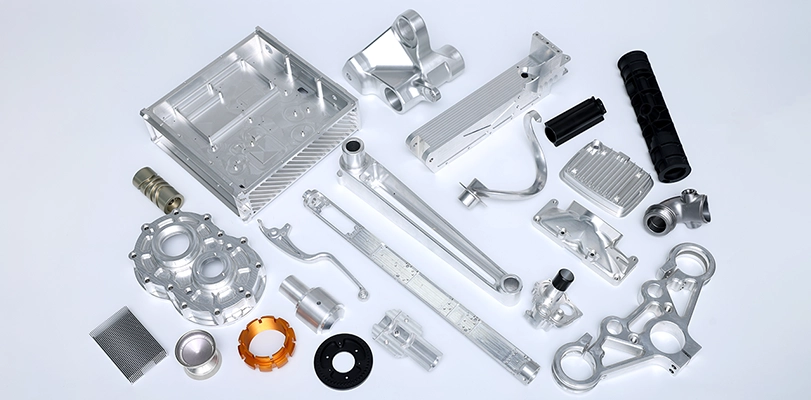
CNC Machined Aluminum Parts: Applications, Benefits and Custom Options
CNC machined aluminum parts are widely used in automotive, new energy, industrial automation, robotics, electronics, communication equipment, and precision machinery. Aluminum is particularly suitable for CNC machining because of its lightweight construction, good machinability, and compatibility with different surface treatments.
For B2B manufacturers and equipment suppliers, custom aluminum CNC machining provides a flexible way to produce components with specific dimensions, mounting structures, tolerances, and functional requirements.
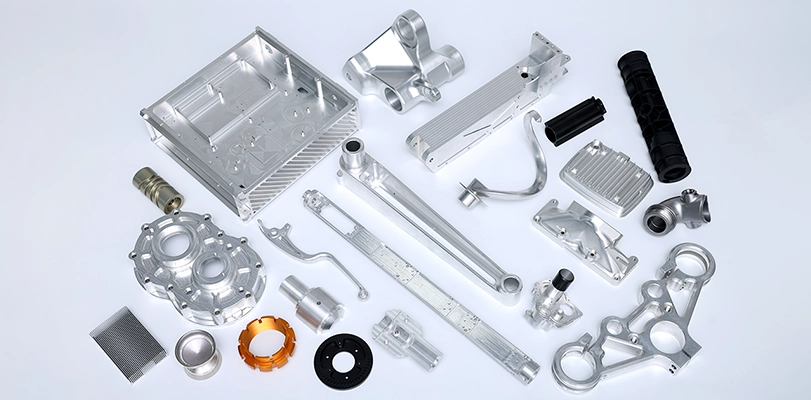
What Are CNC Machined Aluminum Parts?
CNC machined aluminum parts are components manufactured from aluminum materials using computer-controlled machining equipment. Depending on the geometry of the component, CNC milling, CNC turning, drilling, tapping, boring, or multi-axis machining may be used.
The machining process removes material from an aluminum workpiece until the required shape and dimensions are achieved.
Typical CNC aluminum components include:
Aluminum brackets
Aluminum housings
Connecting rods
Mounting plates
Structural components
Heat sinks
Machine components
Robot components
Why Is Aluminum Suitable for CNC Machining?
Lightweight Construction
Aluminum is significantly lighter than many steel materials, making it suitable for applications where component weight needs to be reduced.
This is particularly useful for robotic arms, automation equipment, transportation components, and other moving mechanisms.
Good Machinability
Many aluminum alloys can be efficiently machined using CNC milling and turning processes. Good machinability can contribute to stable production and efficient material removal.
Thermal Conductivity
Aluminum provides good thermal conductivity, which makes certain aluminum alloys suitable for heat-dissipation components such as electronic housings and heat sinks.
Surface Treatment Options
CNC machined aluminum components can be finished using anodizing, sandblasting, polishing, and other surface treatment processes depending on the application.
Common Aluminum Alloys for CNC Machining
| Aluminum Alloy | Common Characteristics | Typical Applications |
|---|---|---|
| 6061 Aluminum | Good machinability, strength and surface finishing capability | Mechanical components, brackets, robot parts, housings |
| 6063 Aluminum | Good machinability and surface finishing performance | Heat sinks, structural components, electronic parts |
| 7075 Aluminum | High strength-to-weight ratio | High-strength mechanical and structural components |
Applications of CNC Machined Aluminum Parts
Automotive Industry
CNC machined aluminum components are used in automotive applications where lightweight construction, dimensional accuracy, and mechanical performance are required.
Examples include mounting brackets, sensor components, housings, structural parts, and other precision mechanical components.
New Energy Equipment
Aluminum CNC parts are widely applicable to new energy equipment such as energy storage systems and electric vehicle components.
Common applications include electronic housings, structural components, motor-related parts, and components used in power management systems.
Industrial Automation
Automation equipment often requires custom mechanical components with precise mounting holes, lightweight structures, and repeatable dimensions.
CNC aluminum parts can be used for brackets, linkages, housings, structural components, and motion-system components.
Robotics
Aluminum is suitable for robot components where reducing moving mass can be beneficial. CNC machining can produce connecting rods, joint components, brackets, and other precision parts.
Electronics and Communication Equipment
Aluminum components can provide a combination of lightweight construction, thermal performance, and surface finishing options for electronic and communication equipment.
Custom Aluminum CNC Machining
Custom aluminum CNC machining allows manufacturers to produce non-standard aluminum components according to specific customer requirements.
Customization can include:
Overall dimensions
Hole positions and diameters
Threads
Pockets and slots
Complex structures
Machining tolerances
Surface treatment
Logo engraving
Customers can provide 2D drawings, 3D CAD models, samples, or technical specifications. The machining process can then be developed according to the component geometry and required production volume.
Surface Treatments for CNC Aluminum Parts
Anodizing
Anodizing can improve the surface hardness and oxidation resistance of aluminum components while providing a consistent appearance.
Sandblasting
Sandblasting can create a uniform matte surface finish and is commonly used for aluminum housings and mechanical components.
Polishing
Polishing can provide a smoother and more refined surface appearance for aluminum components where appearance is important.
How to Ensure Quality in CNC Aluminum Parts?
Quality control should cover the complete manufacturing process rather than only the final inspection.
Important quality control factors include:
Material verification
Drawing review
Machining process control
Dimensional inspection
Mounting feature inspection
Surface treatment inspection
Final packaging inspection
Critical dimensions should be inspected according to the customer's approved technical drawing. For precision components, tolerance requirements should be clearly identified before production.
How to Choose a Custom Aluminum CNC Machining Supplier?
When sourcing custom aluminum CNC parts, B2B buyers should evaluate the supplier's machining capabilities, engineering support, quality control, surface treatment options, production capacity, and experience with similar components.
Key questions to consider include:
Can the supplier machine the required aluminum alloy?
Can the required tolerance be achieved consistently?
Does the supplier support custom drawings?
Can the supplier provide surface treatment?
Can prototypes and production orders both be supported?
Does the supplier have a suitable inspection process?
Can the supplier support long-term OEM production?
CNC Aluminum Parts for Prototype and Mass Production
CNC machining can support different production stages, from prototype development to small-batch manufacturing and long-term mass production.
For prototype orders, CNC machining allows engineers to verify dimensions, assembly, structure, and functionality before committing to larger production volumes.
For mass production, a validated CNC machining process can be repeated to produce consistent components according to approved specifications.
FAQ About CNC Machined Aluminum Parts
1. What aluminum alloys can be CNC machined?
Common CNC machining aluminum alloys include 6061, 6063, and 7075. The appropriate alloy depends on strength, weight, machinability, surface treatment, and application requirements.
2. What are CNC machined aluminum parts used for?
They are used in automotive components, new energy equipment, industrial automation, robotics, electronics, communication equipment, industrial machinery, and precision instruments.
3. Can aluminum CNC parts be customized?
Yes. Dimensions, holes, threads, pockets, structures, tolerances, surface treatments, and other features can be customized according to customer drawings or samples.
4. What surface treatments are available for aluminum CNC parts?
Common options include anodizing, sandblasting, and polishing. The appropriate treatment depends on the desired appearance and functional requirements.
5. Can CNC aluminum parts be made from customer drawings?
Yes. 2D engineering drawings, 3D CAD files, samples, and technical specifications can be used as the basis for custom production.
6. Are CNC aluminum parts suitable for mass production?
Yes. CNC machining can support prototype production, small batches, and larger production quantities when the machining process has been properly validated.
7. How can I get a quotation for custom aluminum CNC parts?
Provide your drawing or CAD file together with the material, quantity, tolerance, surface treatment, and other technical requirements. This information allows the machining supplier to evaluate the project and prepare an accurate quotation.